Servo Electric Hydraulic Press Manufacturer
Servo Electric Press Manufacturer
Servo Electric Hydraulic Press Manufacturer in India
Servo Electric Press Manufacturer in India
HeavyPresses provides servo electric press solutions designed for precision pressing, controlled motion and repeatable industrial manufacturing operations. As a Servo Electric Press Manufacturer in India, our focus is on supporting production requirements where accurate force application, programmable movement and consistent process control are essential.
Servo electric press machines use electrically driven servo systems to control pressing movement. Compared with conventional hydraulic systems, servo-electric technology can offer precise positioning, programmable motion profiles and improved process monitoring for suitable applications.
Our servo-driven press solutions are intended for manufacturers seeking greater control over assembly, joining, forming and other precision pressing operations.
What Is a Servo Electric Press?
A servo electric press is an industrial pressing machine that uses a servo motor and an electromechanical drive mechanism to generate controlled linear force and movement.
Depending on the machine design, the servo motor may drive a ball screw, roller screw or another mechanical transmission system. The press controller manages parameters such as position, speed, force and stroke to perform a defined pressing operation.
Servo electric presses are commonly used in applications requiring repeatability, controlled pressing profiles and monitoring of force-displacement behavior.
Unlike a conventional hydraulic press, a fully electric servo press does not rely on hydraulic fluid pressure as its primary source of pressing force.
Servo Electric Press Machines for Precision Manufacturing
HeavyPresses focuses on servo-driven pressing solutions for industrial applications where accurate movement and repeatable performance are important.
Servo electric press technology is particularly suitable for operations that benefit from controlled approach speeds, programmable pressing sequences and accurate end-position control.
Depending on the configuration, a servo electric press machine can support:
Programmable press stroke and motion profiles
Controlled pressing speed and position
Force monitoring and process feedback
Repeatable press-fit and assembly operations
Integration with industrial automation systems
Monitoring of pressing results for quality control
Custom tooling and application-specific fixtures
Actual machine capabilities depend on the servo drive, transmission, sensors, controller and overall press design.
Key Features of Servo Electric Press Machines
1. Precise Force and Position Control
Servo electric press systems can provide controlled positioning and pressing force for operations where accuracy is critical. Suitable sensors and control systems allow the machine to follow programmed pressing parameters.
2. Programmable Pressing Operations
Operators can configure pressing sequences for different products or components. Programmable motion profiles can help accommodate different stroke lengths, pressing speeds and process requirements.
3. Repeatable Industrial Performance
A properly designed servo electric press can deliver repeatable movement and pressing cycles, supporting consistent manufacturing operations.
4. Force-Displacement Monitoring
When equipped with appropriate monitoring systems, servo presses can record the relationship between pressing force and displacement. This information helps manufacturers evaluate whether a pressing operation meets defined process limits.
5. Automation Integration
Servo electric presses can be incorporated into automated assembly stations, robotic production lines and other manufacturing systems, subject to controller and communication compatibility.
6. Energy-Efficient Operation
Servo electric drives can reduce energy consumption in certain duty cycles because power is used according to the motion and load requirements. Actual savings depend on the application and comparison equipment.
7. Reduced Hydraulic Maintenance Requirements
Fully electric servo presses do not require a conventional hydraulic power unit for their primary pressing action. This can eliminate some hydraulic-fluid-related maintenance activities, although electromechanical components still require routine inspection and servicing.
Applications of Servo Electric Press Machines
Servo electric presses are used across industrial sectors where controlled force, accurate positioning and process repeatability are required.
Automotive Component Manufacturing
Servo electric presses can be used for bearing insertion, bush fitting, press-fit assemblies and other controlled joining operations involving automotive components.
Electrical and Electronics Manufacturing
Precision servo presses can support component assembly, connector insertion and selected joining operations where consistent movement and controlled force are necessary.
Bearing and Bushing Assembly
Servo electric press systems are suitable for controlled insertion of bearings, bushings and similar components. Force-displacement monitoring can help identify deviations during assembly.
Industrial Assembly Operations
Servo presses can support interference fitting, mechanical joining and component insertion in automated or semi-automated manufacturing environments.
Precision Metal Forming
Depending on capacity and machine design, servo electric presses may be used for selected forming, bending, crimping and shaping operations.
Automated Production Lines
Servo electric press machines can be integrated into production cells requiring repeatable pressing sequences, programmable controls and manufacturing data collection.
Advantages of Servo Electric Press Technology
Choosing the appropriate pressing technology is important for production quality, operating efficiency and long-term equipment performance.
| Feature | Servo Electric Press | Conventional Hydraulic Press |
|---|---|---|
| Primary drive | Electric servo motor and mechanical transmission | Hydraulic power system |
| Position control | Programmable, with suitable feedback | Depends on hydraulic control system |
| Force control | Depends on drive and sensing configuration | Depends on hydraulic system design |
| Motion programming | Typically supported | Available on suitably equipped machines |
| Hydraulic oil | Not required for primary pressing drive | Generally required |
| Maintenance | Mechanical drive, lubrication and electrical systems | Hydraulic components, fluid and electrical systems |
| Typical suitability | Precision assembly and controlled pressing | Wide range of pressing duties, including high-force applications |
Neither technology is universally better. The correct choice depends on required force, stroke, cycle time, process accuracy, duty cycle and operating conditions.
Custom Servo Electric Press Manufacturer in India
Industrial pressing requirements vary according to the component, manufacturing process and production environment.
HeavyPresses can develop application-specific servo electric press solutions based on defined technical requirements, subject to engineering feasibility and available product configurations.
Customization requirements may include:
Pressing force and load capacity
Working stroke and daylight opening
Ram speed and motion profile
Force and position monitoring
Press frame configuration
Tooling and fixture requirements
Operator interface and control architecture
Integration with PLC-based production systems
Safety guarding and interlocking arrangements
Production data monitoring and reporting
For accurate machine selection, customers should share component drawings, material information, target force, required stroke, cycle time and quality-control requirements.
How to Choose the Right Servo Electric Press Machine
Selecting the correct servo electric press requires more than choosing a machine by tonnage.
Required Pressing Force
Determine the maximum force required for the process, including suitable engineering margins. Excessive force capacity may increase equipment cost without improving process performance.
Stroke Length and Working Height
The machine must provide sufficient movement and clearance for the component, tooling and handling arrangement.
Force and Position Accuracy
Define acceptable tolerances for the pressing process. The required accuracy should be evaluated across the complete machine system rather than the motor alone.
Cycle Time
Consider approach speed, pressing speed, return movement, loading and unloading time, and overall production requirements.
Monitoring and Quality Requirements
Applications involving critical assemblies may require force-displacement curves, process limits, data logging and traceability.
Automation Requirements
If the machine will operate in an automated line, assess controller communication, safety interfaces, component handling and integration requirements.
Why Choose HeavyPresses for Servo Electric Press Solutions?
HeavyPresses focuses on industrial pressing equipment and application-based machine selection.
Our approach emphasizes understanding the pressing process before recommending a machine configuration.
Application-Oriented Engineering: Press selection based on component requirements, pressing force, stroke, cycle time and production objectives.
Customized Machine Configuration: Evaluation of machine design, tooling, controls and automation requirements for the intended operation.
Industrial Process Focus: Attention to machine performance, operating conditions, maintainability and manufacturing requirements.
Technical Coordination: Support in reviewing specifications and identifying the appropriate pressing solution for the application.
India-Based Customer Communication: Coordination for industrial customers seeking servo electric press solutions in India.
The final scope of engineering, manufacturing, installation and after-sales services should be confirmed in the project proposal.
Servo Electric Press Manufacturer for Industrial Automation
Modern manufacturing environments increasingly require controlled production processes, consistent component assembly and measurable quality parameters.
A servo electric press can be an effective part of an automated manufacturing system when the pressing operation requires programmable movement and process feedback.
Depending on the configuration, the press can communicate with a PLC, operator interface or production monitoring system to coordinate pressing cycles with surrounding equipment.
This makes servo electric press technology relevant to manufacturers developing automated assembly stations and production cells.
Request a Quote for a Servo Electric Press Machine
Looking for a servo electric press manufacturer in India for precision assembly, controlled pressing or industrial automation applications?
Share your technical requirements with HeavyPresses.com to discuss a suitable machine configuration.
HeavyPresses — Hind Presses and Automation Pvt. Ltd.
Location: Faridabad, Haryana, India Phone: +91 96541 87777
Email: abhay@hindpresses.com Website: https://heavypresses.com
Enquire Now — Discuss Your Servo Electric Press Requirements
Photo gallery
Frequently asked questions
1. What is a servo electric press?
A servo electric press is an industrial machine that uses a servo motor and an electromechanical drive system to generate controlled pressing force and movement. It is commonly used for precision assembly, press fitting, component joining and selected metal forming applications.
2. How does a servo electric press machine work?
A servo electric press uses a servo motor to drive a mechanical transmission, such as a ball screw or roller screw, which converts rotary motion into linear pressing movement. The control system regulates parameters such as stroke, position, speed and force based on the application.
3. What is the difference between a servo electric press and a hydraulic press?
A servo electric press generates pressing movement through an electric servo motor and mechanical transmission, while a hydraulic press uses pressurized fluid to produce force. Servo electric presses are commonly selected for precision assembly and controlled pressing, whereas hydraulic presses are widely used for high-force industrial operations.
4. What are the advantages of a servo electric press?
Potential advantages include programmable motion, precise positioning, process monitoring, repeatability and reduced dependence on hydraulic equipment. The benefits depend on machine design and application requirements.
5. Which industries use servo electric presses?
Servo electric presses are used in automotive manufacturing, electrical equipment production, bearing assembly, industrial component manufacturing and automated assembly operations.
6. Can servo electric presses be customized?
Yes. Servo electric press machines can be engineered with different capacities, stroke lengths, frame configurations, control systems, tooling arrangements and monitoring features, subject to technical feasibility.
7. Are servo electric presses suitable for automated production lines?
Yes. Properly equipped servo electric presses can be integrated into automated manufacturing systems using suitable controls, communication interfaces and safety arrangements.
8. How do I choose the correct servo electric press capacity?
Machine selection should consider required pressing force, stroke length, component dimensions, cycle time, positioning accuracy, tooling and operating duty cycle.
9. What is the price of a servo electric press machine in India?
The price depends on pressing capacity, stroke, control system, sensors, frame design, automation requirements and customization. A technical specification is generally needed for an accurate quotation.
10. Where can I enquire about a servo electric press machine in India?
Industrial buyers can contact HeavyPresses with their application requirements, component specifications and desired production parameters to discuss suitable pressing equipment.
Other presses we supply
SMC and Composite Hydraulic Presses
Compression moulding presses for SMC, BMC and composite components.
View details
Open Die Forging Hydraulic Presses
Open die forging hydraulic presses from 800 to 22,000 ton with manipulators and automation.
View details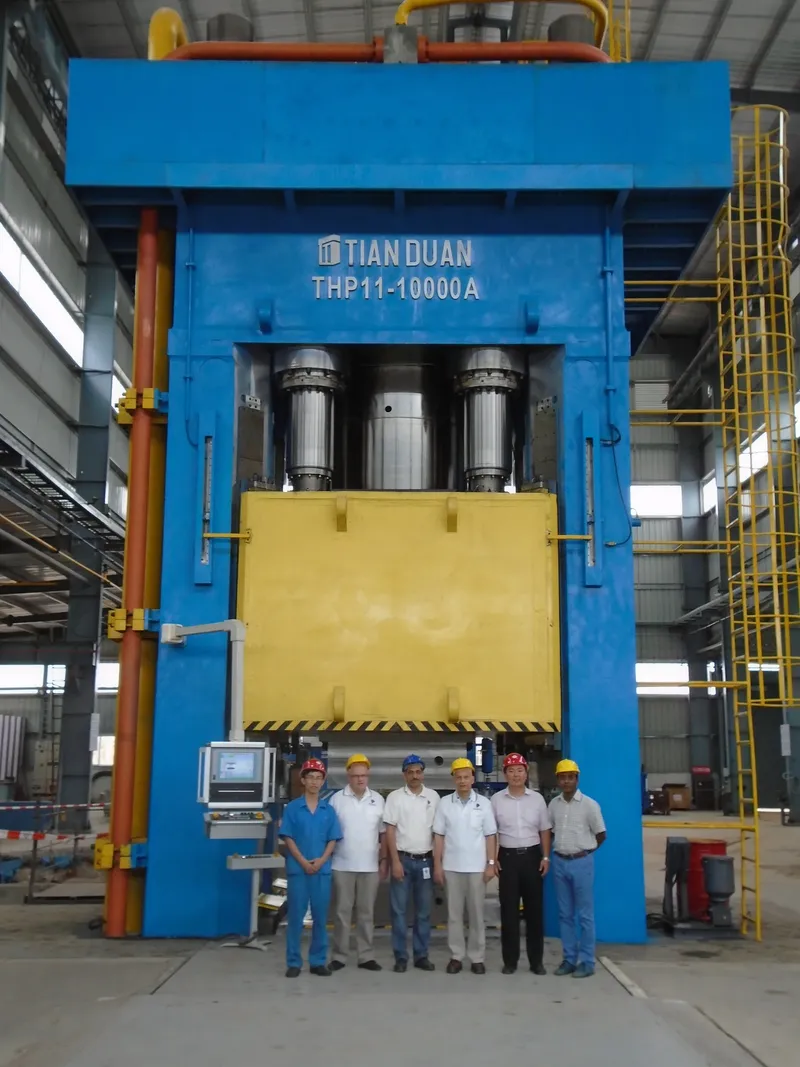
Close Die Hydraulic Forging
Precision close die forging presses for repeatable near-net-shape parts.
View details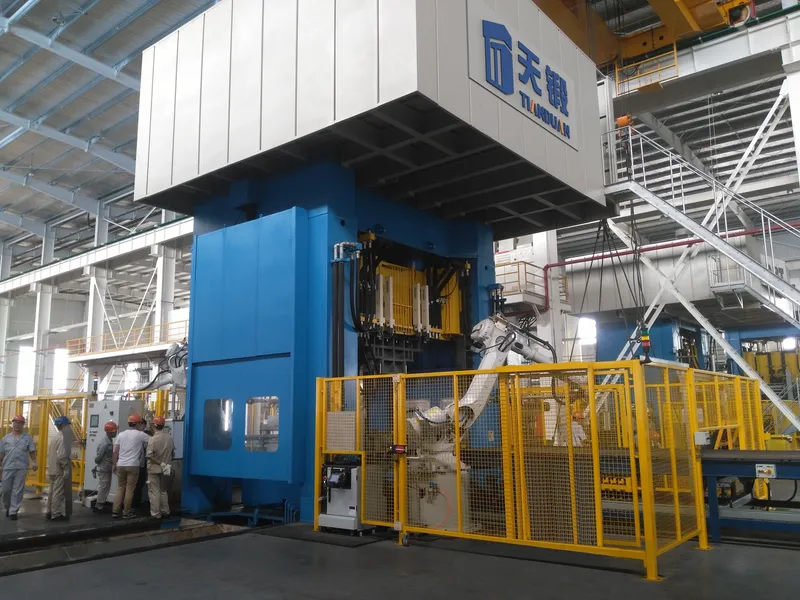
Hot Stamping Hydraulic Presses
Press hardening presses for ultra high strength automotive parts.
View details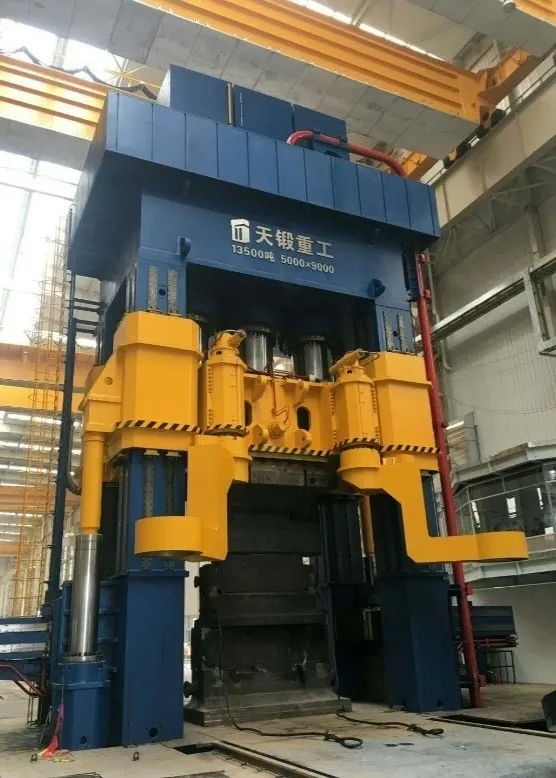
Ring Blank Hydraulic Forging Press
Ring blank forging presses, including 5,000 ton ring forging presses.
View details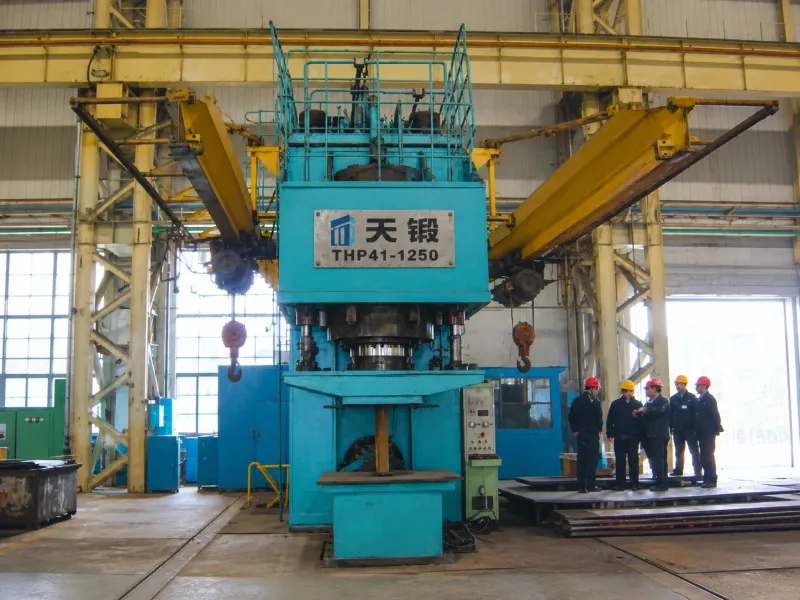
Ship Building Hydraulic Presses
Plate bending, forming and flanging presses for shipyards.
View detailsTell us your requirement. An engineer will reply on WhatsApp.
Share tonnage, material, part size and annual output for a fast, accurate quote.