
Press hardening explained
Hot Stamping Process: Step-by-Step Production Guide
How boron steel blanks become ultra-high-strength car parts, and what equipment each step needs.
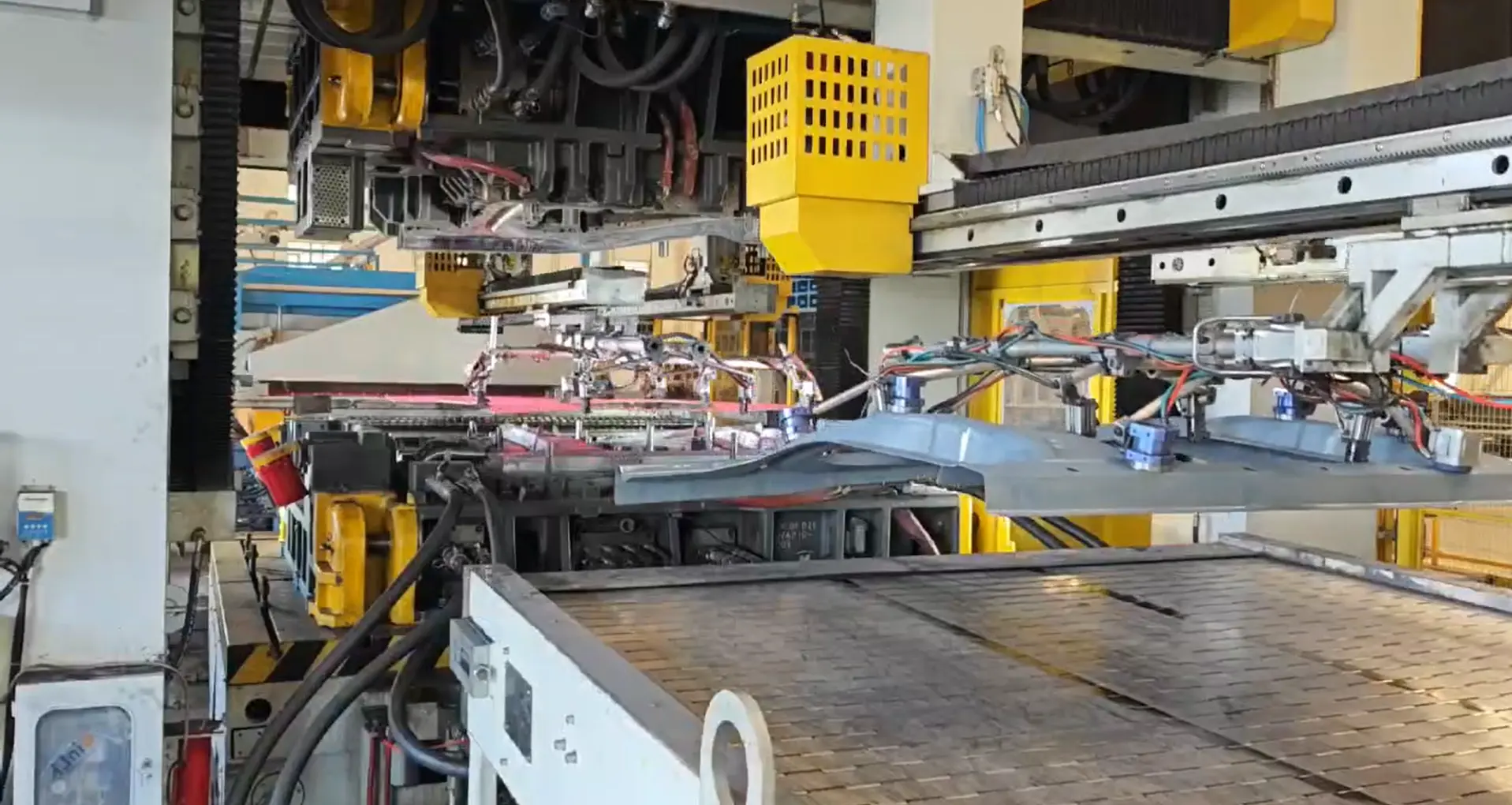
The hot stamping process, also called press hardening, forms heated boron steel and hardens it in the same die. It produces parts with very high strength and very little springback. This guide explains each step and the equipment a hot stamping line needs, from furnace to press.
Hind Presses & Automation supplies hot stamping presses and complete hot forming production lines for automotive parts makers.
Key features
Step 1: Blanking
Boron steel coil is cut into flat blanks shaped for the part.
Step 2: Heating
Blanks are heated to about 900 to 950 °C until fully austenitic.
Step 3: Transfer
Robots or transfer move the hot blank into the die within seconds.
Step 4: Forming
The press closes fast and forms the part while it is still hot.
Step 5: Quenching
The part is held in water-cooled dies and turns into martensite.
Step 6: Trimming
Hardened parts are laser trimmed or hard-trimmed to final shape.
Why the hot stamping process gives such strong parts
When boron steel is heated, its structure changes to austenite. Rapid cooling in the die turns it into martensite, a very hard structure. Because forming happens while the steel is hot and soft, complex shapes are possible, and springback is very low once the part is hardened.
Specifications
| Typical steel | Boron steel such as 22MnB5, uncoated or Al-Si coated |
|---|---|
| Heating temperature | About 900 to 950 °C |
| Strength after quench | Tensile strength around 1,500 MPa |
| Forming press | Hot forming hydraulic, servo mechanical or multi-link press |
| Die | Water-cooled forming die |
| Finishing | Laser trimming or hard trimming |
| Typical parts | Pillars, bumper beams, door beams, rails, tunnels |
What you get
- Process and line planning
- Hot forming press sized to your parts
- Furnace interface and transfer automation
- Die cooling interface
- Line controls and data logging
- Installation and commissioning
- Operator training and service
Direct and indirect hot stamping
In direct hot stamping, a flat blank is heated and formed in one step. In indirect hot stamping, the part is first cold formed close to shape, then heated and quenched in a die. Direct hot stamping is the most common method for body parts.
Presses for each step
The key machine is the forming press. It must close fast, then hold force during quenching. Options include a hot forming hydraulic press, a servo mechanical hot forming press and a multi-link hot forming press. We help you choose for your volume.
Why Hind Presses & Automation
Hot forming lines need the press, automation and furnace to work as one. We plan the full line with you, engineer the press with finite element analysis, and support installation, start-up and service in India from Faridabad. Our engineering team of more than 250 engineers builds on press experience going back to 1956.
Frequently asked questions
What is the hot stamping process?
It is a process where boron steel is heated, formed while hot and quenched in a cooled die, giving parts with very high strength.
Is hot stamping the same as press hardening?
Yes. Hot stamping, hot forming and press hardening refer to the same process.
What steel is used for hot stamping?
Boron steels such as 22MnB5 are most common, often with an aluminium-silicon coating.
What strength do hot stamped parts reach?
Tensile strength is typically around 1,500 MPa after quenching.
Which press is best for hot stamping?
It depends on volume. Hydraulic presses suit flexible production; servo mechanical and multi-link presses suit high-volume lines.
More hot forming equipment
- Hot Forming Hydraulic Press
- Hot Forming Production Line
- Servo Mechanical Hot Forming Press
- Multi-Link Hot Forming Press
- Hot stamping hydraulic presses
Not sure which machine fits your part? Talk to our engineers or call +91-96541 87777.
Watch the press in action
Other presses we supply
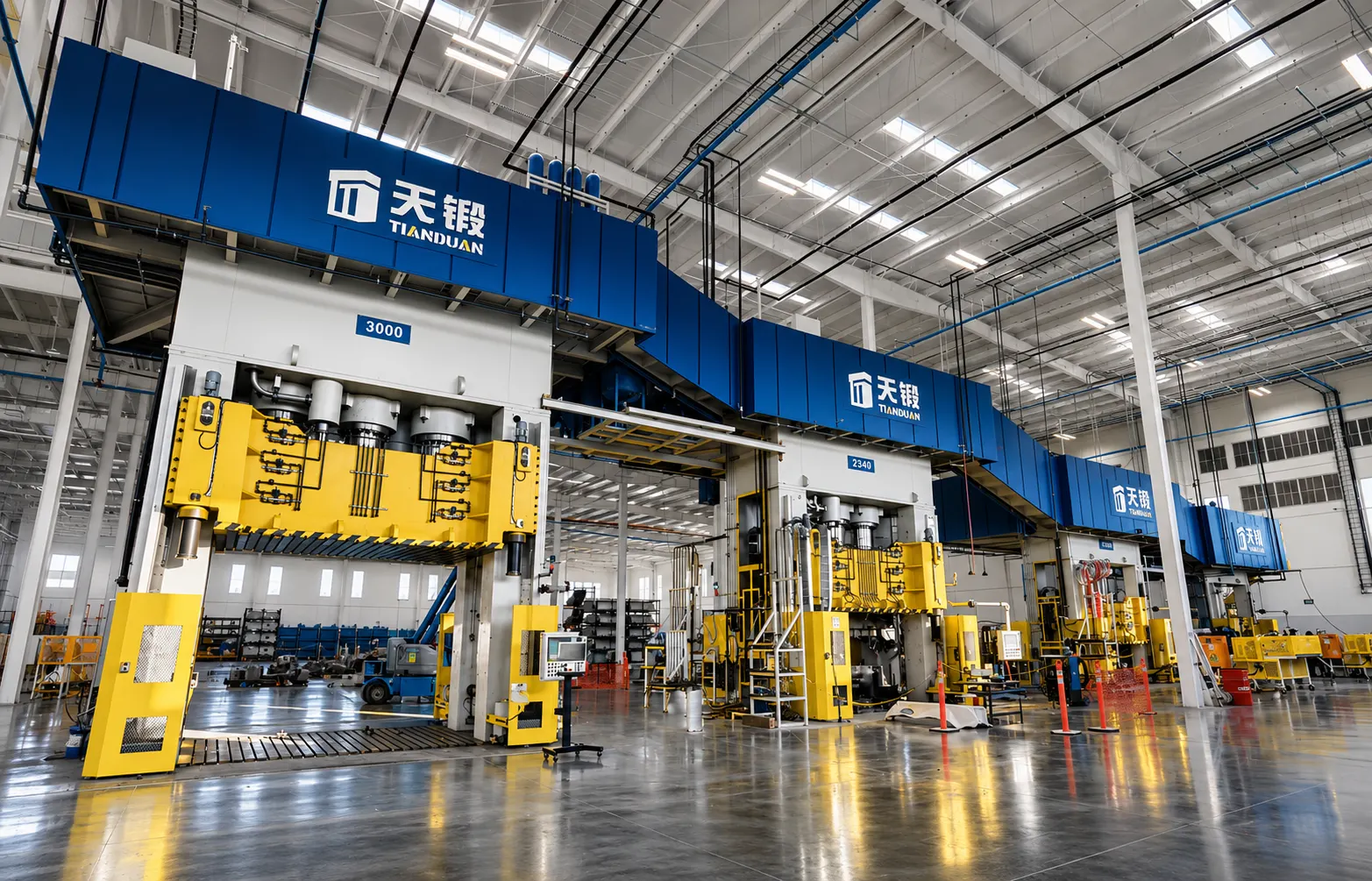
SMC and Composite Hydraulic Presses
Compression moulding presses for SMC, BMC and composite components.
View details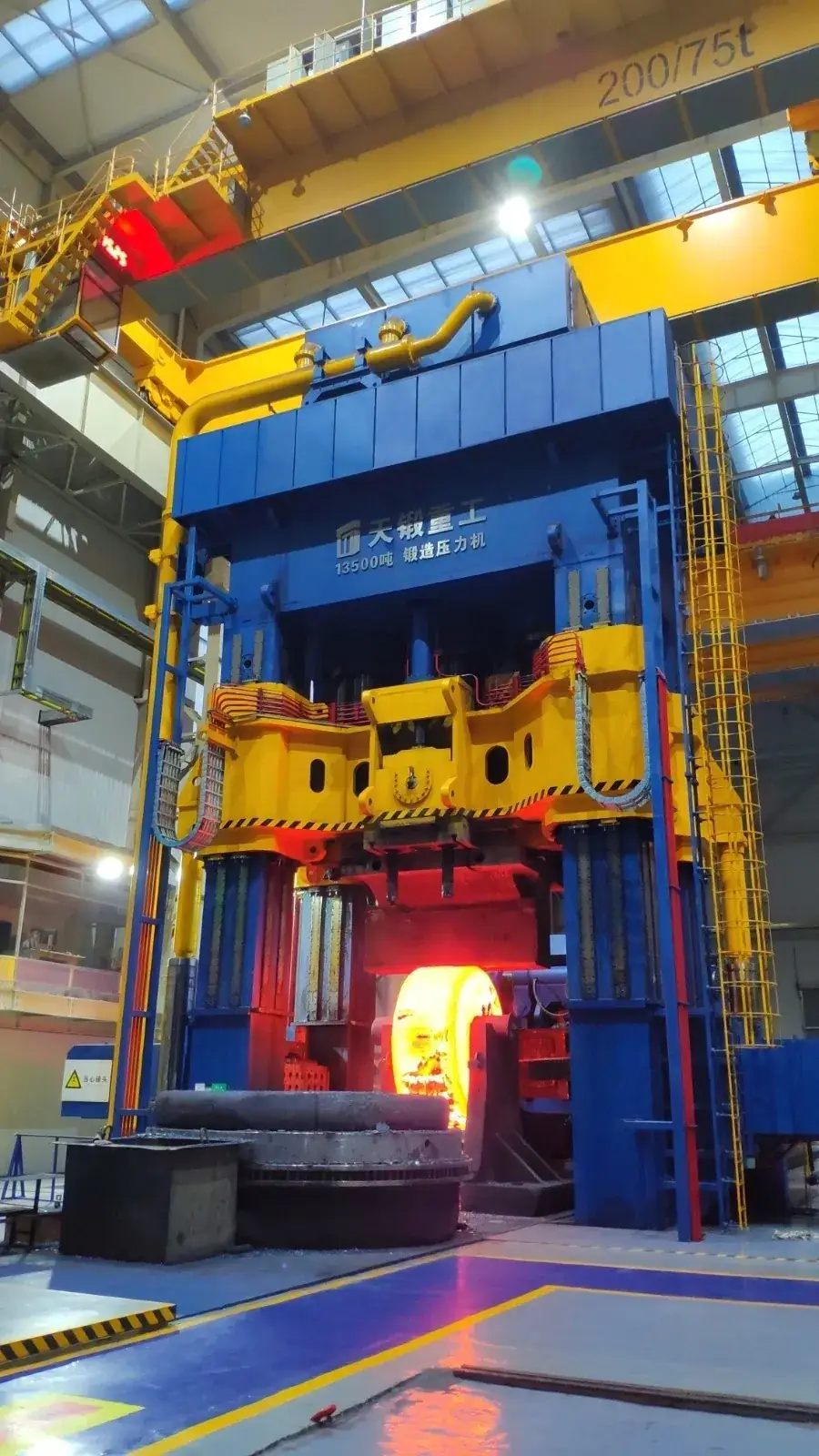
Open Die Forging Hydraulic Presses
Open die forging hydraulic presses from 800 to 22,000 ton with manipulators and automation.
View details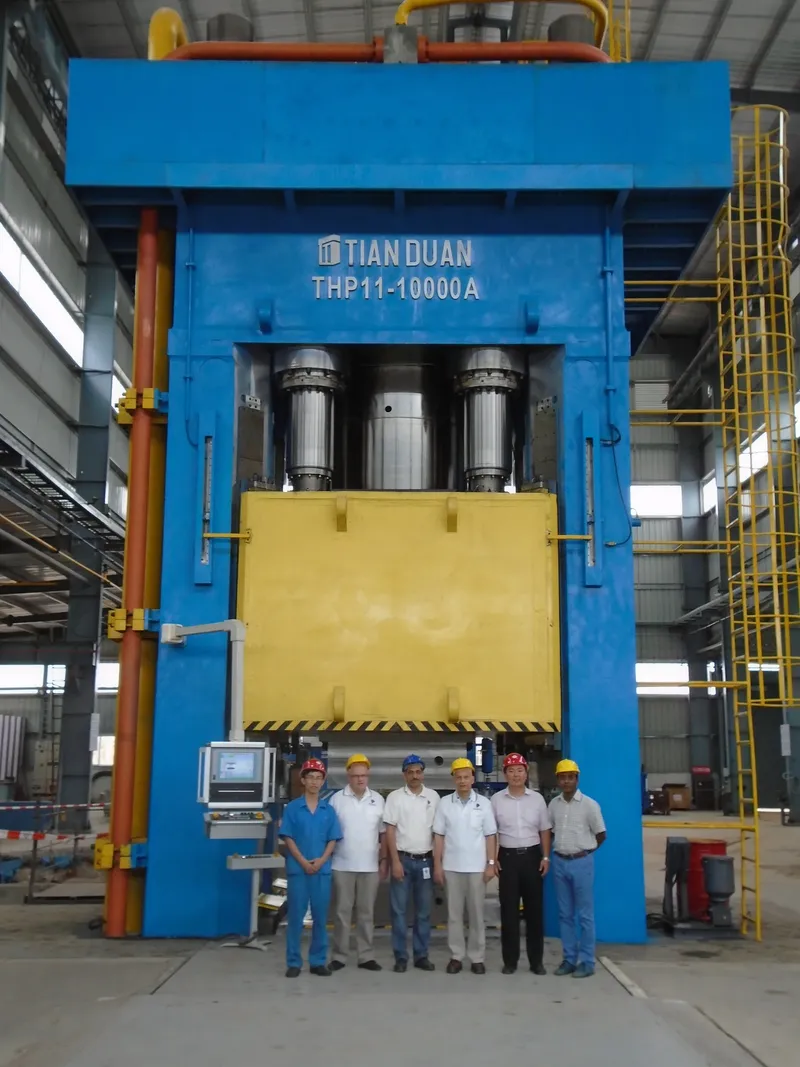
Close Die Hydraulic Forging
Precision close die forging presses for repeatable near-net-shape parts.
View details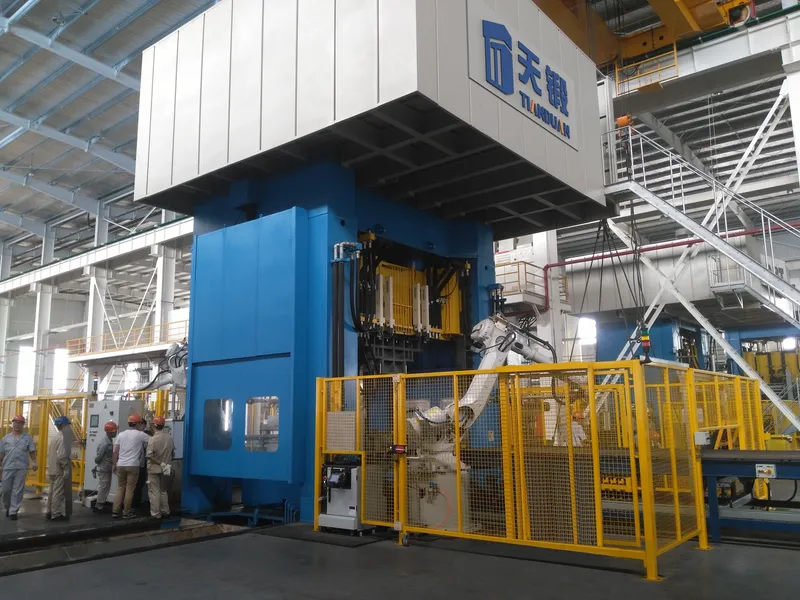
Hot Stamping Hydraulic Presses
Press hardening presses for ultra high strength automotive parts.
View details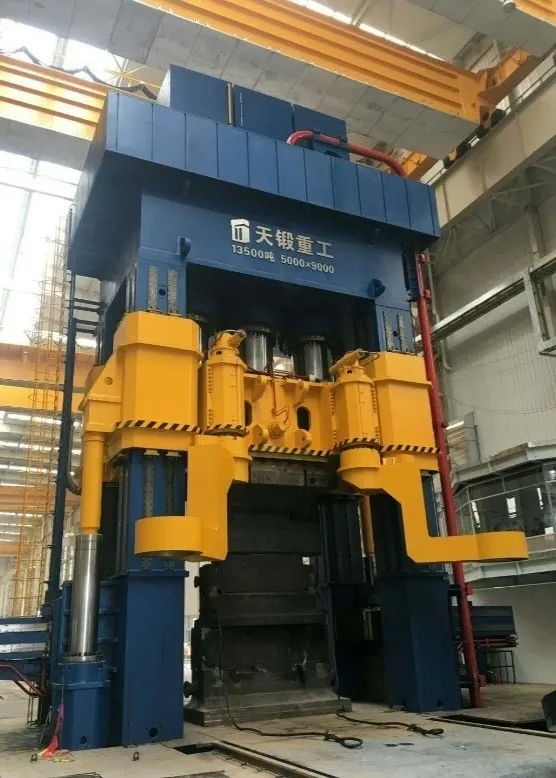
Ring Blank Hydraulic Forging Press
Ring blank forging presses, including 5,000 ton ring forging presses.
View details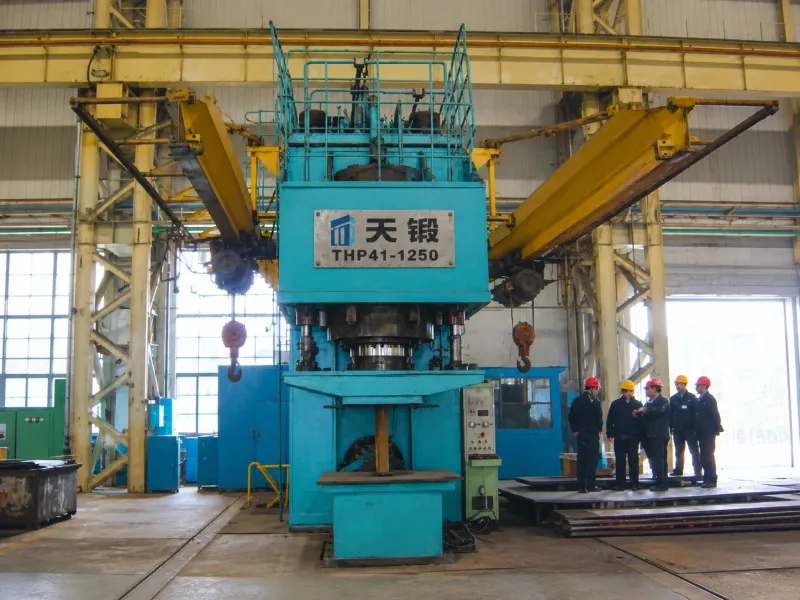
Ship Building Hydraulic Presses
Plate bending, forming and flanging presses for shipyards.
View detailsTell us your requirement. An engineer will reply on WhatsApp.
Share tonnage, material, part size and annual output for a fast, accurate quotation.